Ads in ChatGPT: What They Look Like, How to Turn Them Off, and Whether They're Worth It for Businesses
ChatGPT has been displaying ads in Germany since August. We’ll show you who sees them, how to turn them off, how much they cost, and which businesses can benefit from this new advertising channel.
Date
Category
Author

Since August 24, 2026, ChatGPT has featured ads in Germany. Users who ask ChatGPT—either for free or on the affordable “Go” plan—what materials they need for a garden fence may now see an ad from a lumber dealer below the answer. In September, “ChatGPT advertising” was searched 3,600 times in Germany, compared to just 170 times the previous month. For users, this raises the question of how neutral the answers still are. For companies, it raises the question of whether a new advertising channel is emerging here that’s worth pursuing.
This post answers both questions. We’ll show you what the ads look like, who sees them, how to turn them off, how much they cost, and which businesses they’re suitable for. All information is taken from OpenAI’s help pages, guidelines, and announcements, supplemented by press reports, which we’ll identify as such. As of October 12, 2026.
In a nutshell (as of October 12, 2026)
Only users of the Free and Go plans see ads, which appear below the reply and are labeled “Sponsored.” Plus, Pro, Business, and Enterprise plans remain ad-free, as do temporary chats and accounts held by users under 18. In Germany, the ads are not yet personalized; they are based on the current conversation. Since August 31, companies have been able to place their own ads, starting at 15 euros per day. However, financial, healthcare, and legal service providers are excluded outside the U.S. There are no reliable performance metrics for Germany yet, so a small, carefully measured test is the right way to start.
Who sees ads in ChatGPT?
Ads are only included in the Free and Go plans. This is what it says on OpenAI’s German pricing page: Go costs 8 euros per month and is explicitly “ad-supported” (1), with the note “This plan may contain ads” (2). Plus, for 23 euros (3), and Pro, starting at 103 euros (4), are labeled “Ad-free.” According to OpenAI, the Business, Enterprise, and Edu plans are also ad-free.
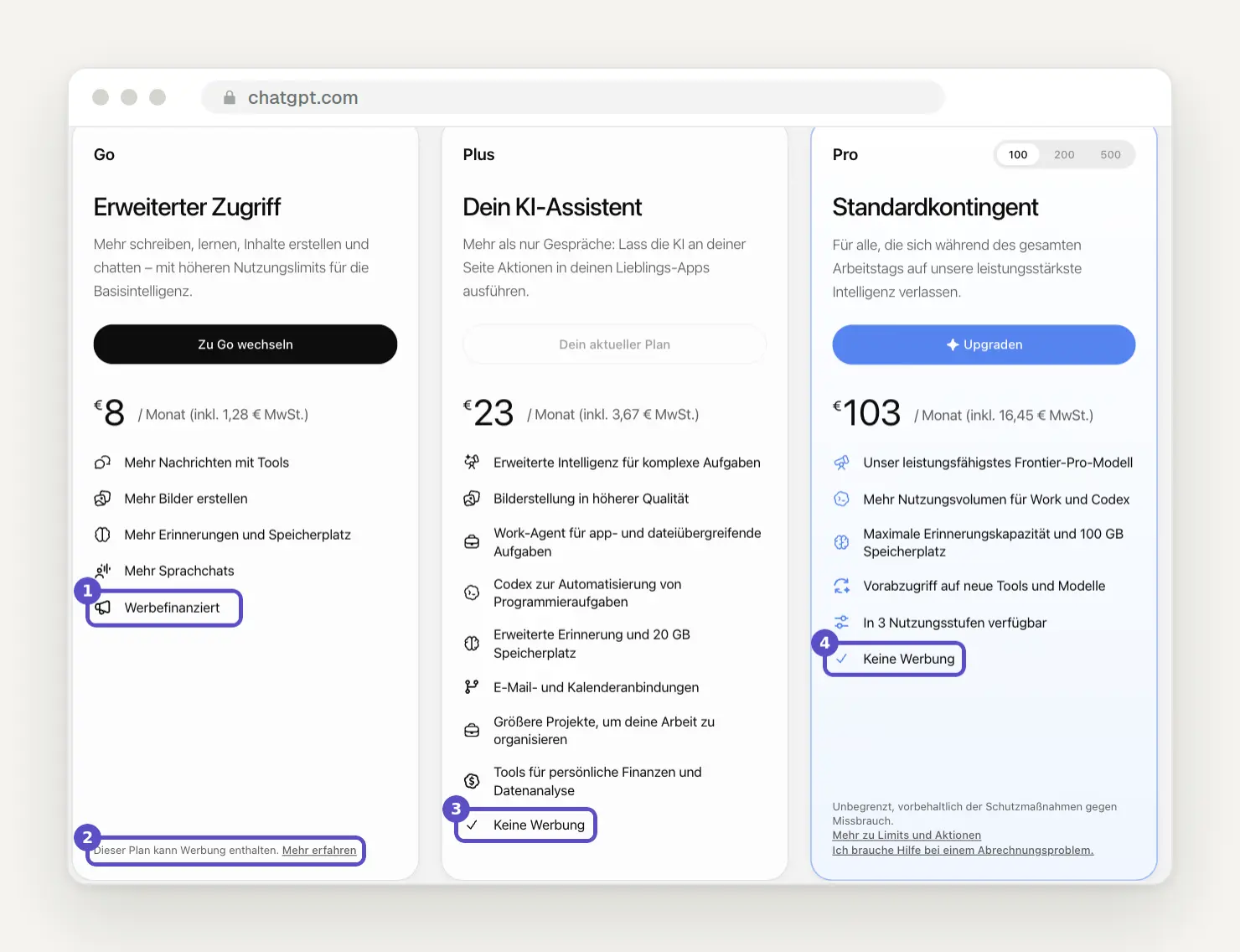
ChatGPT's German pricing page: The "Go" plan is ad-supported (1, 2), while the "Plus" (3) and "Pro" (4) plans are ad-free.
Some cases are generally excluded. Accounts that OpenAI associates with individuals under the age of 18 do not see ads; this association is based on the user’s stated age and an age estimate. Temporary chats remain ad-free. However, ads do appear even without logging in—but only those suitable for all age groups.
This is what the ad looks like
The ad appears below the response, clearly set apart and labeled. According to OpenAI, ads can be “displayed below the end of a response”; they are “clearly labeled as ‘sponsored’ and visually separated from ChatGPT’s response.” OpenAI’s current example illustrates exactly the scenario that is of interest to tradespeople and retailers: Someone asks about materials for a garden fence, and below the list appears an ad from a lumber supplier for privacy fencing.
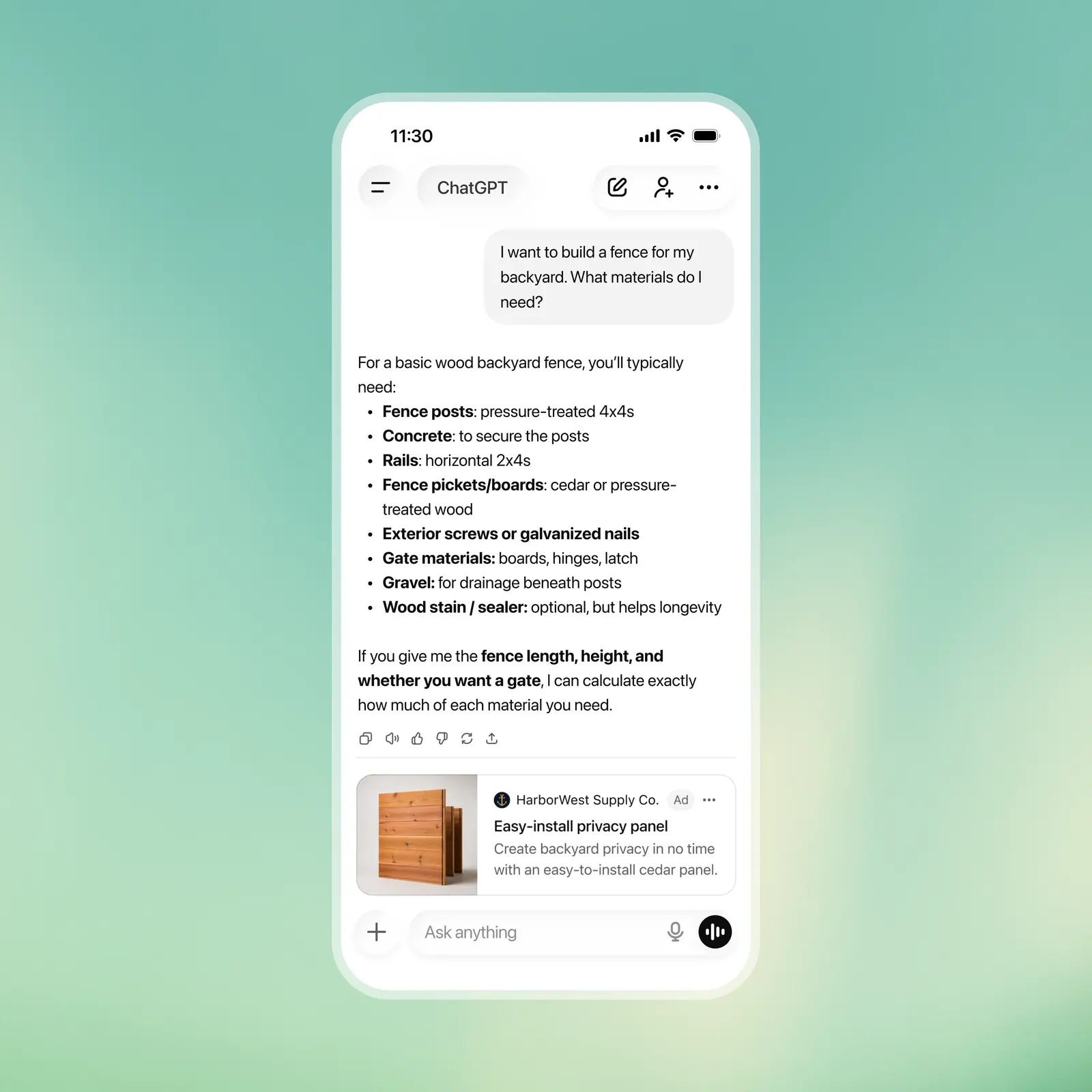
An ad below the answer on the topic of garden fences, labeled "Ad." Image: OpenAI, Source: openai.com/advertisers
Online stores can display full product cards. A product feed generates cards featuring an image, price, availability, and delivery time, with multiple cards displayed as a carousel. OpenAI calls these product ads the most powerful formats in the program to date. Below each ad is the following statement: "Ads do not influence responses; your chats remain private."
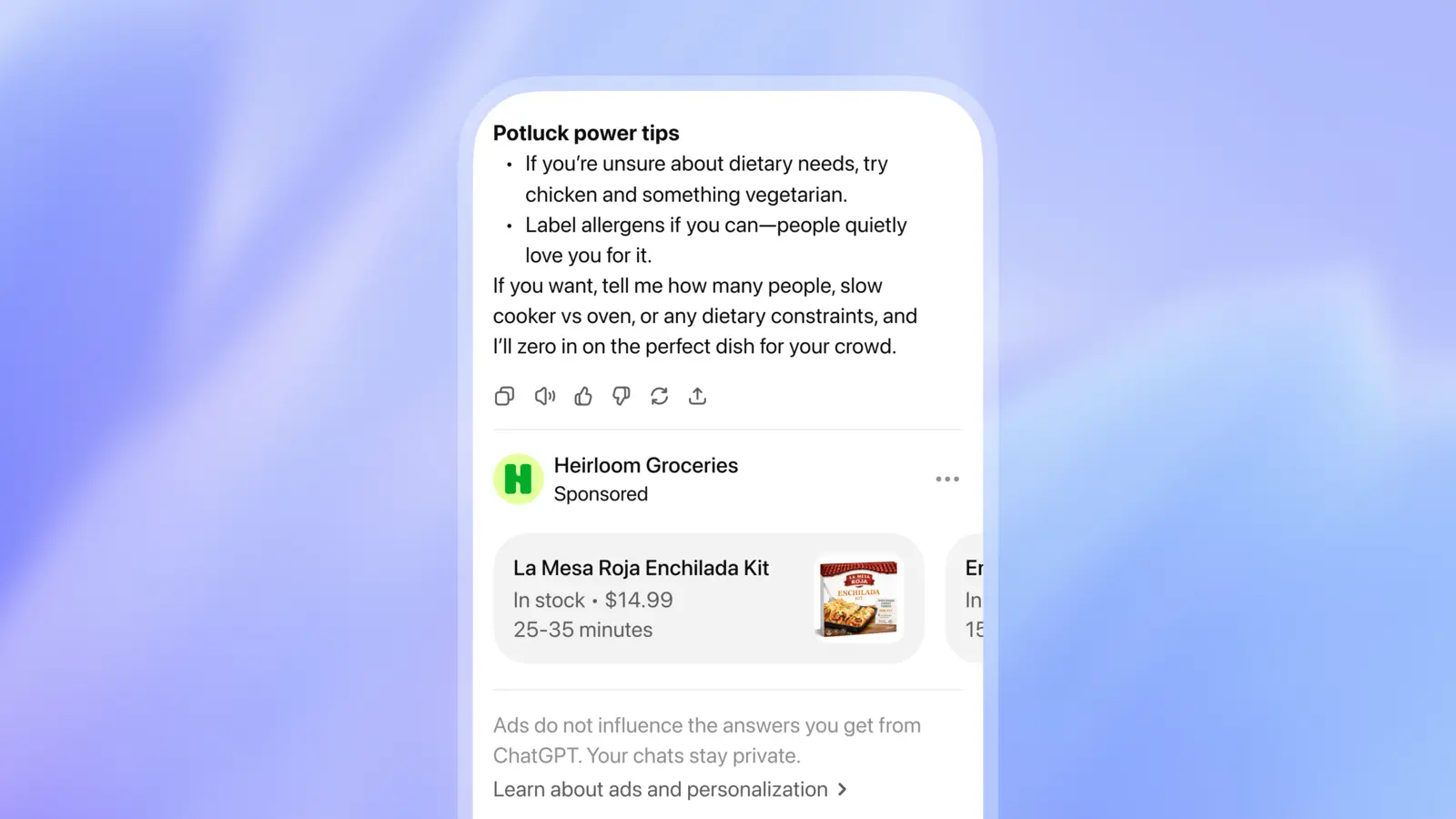
A sponsored product card below an answer, showing the price and delivery time. Image: OpenAI, Source: openai.com/index/testing-ads-in-chatgpt
Users can chat directly with the advertiser. Some ads include a button that allows users to start a conversation with the company. According to OpenAI, the advertiser can only see the messages sent directly to them, not the original conversation. In the U.S., OpenAI has also been testing “Sponsored Agents” since September 16—companies’ own AI assistants that operate distinctly separate from ChatGPT’s responses.
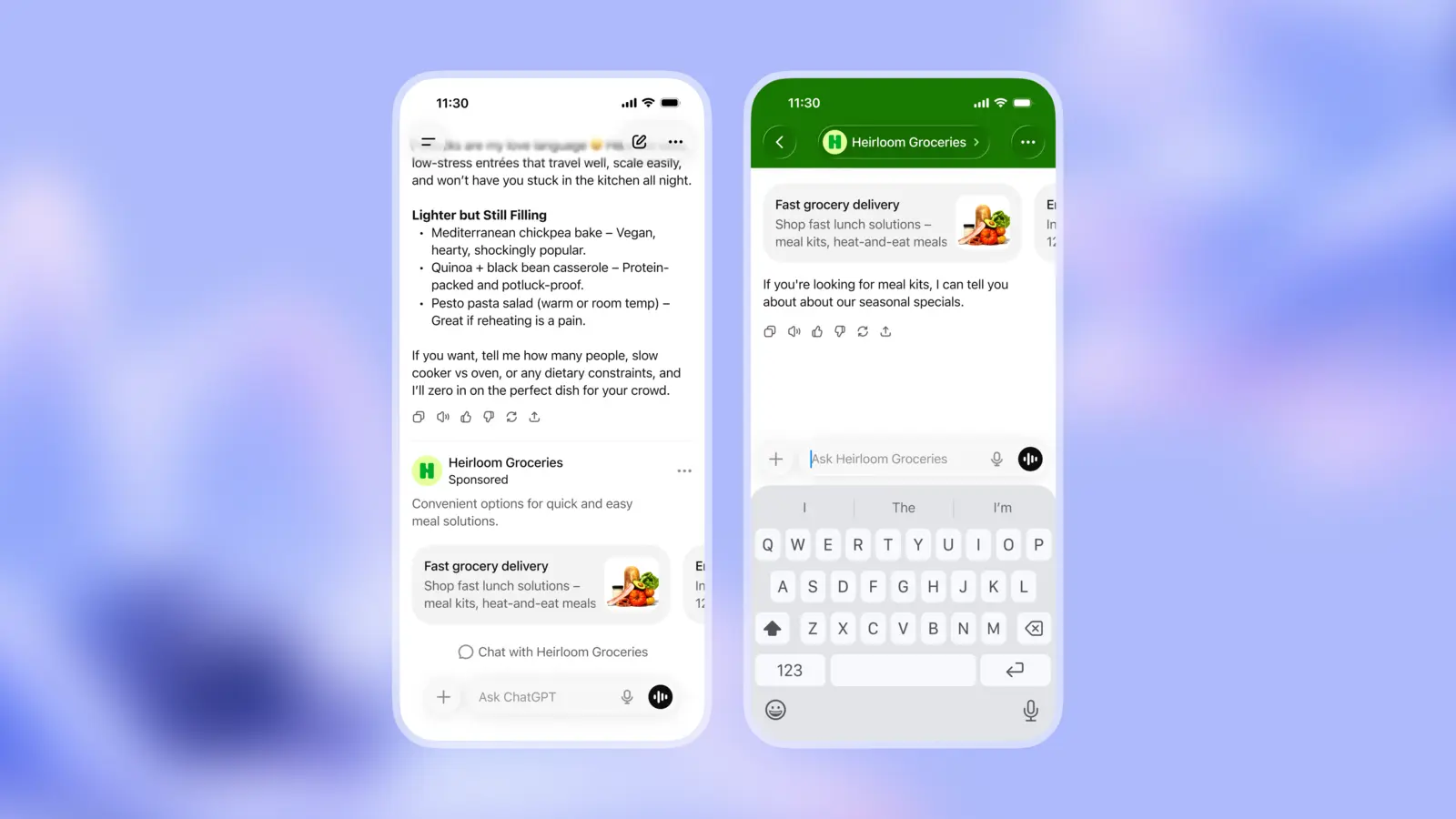
On the left is an ad with the "Chat with …" button; on the right is the conversation with the advertiser. Image: OpenAI, Source: openai.com/index/our-approach-to-advertising-and-expanding-access
The latest ad format appears while ChatGPT is generating an image. On October 5, OpenAI announced full-screen image ads that pop up while users wait for a generated image. According to OpenAI, testing will begin in the U.S. in late October with the first advertisers. It is unclear when the format will be available in Germany.
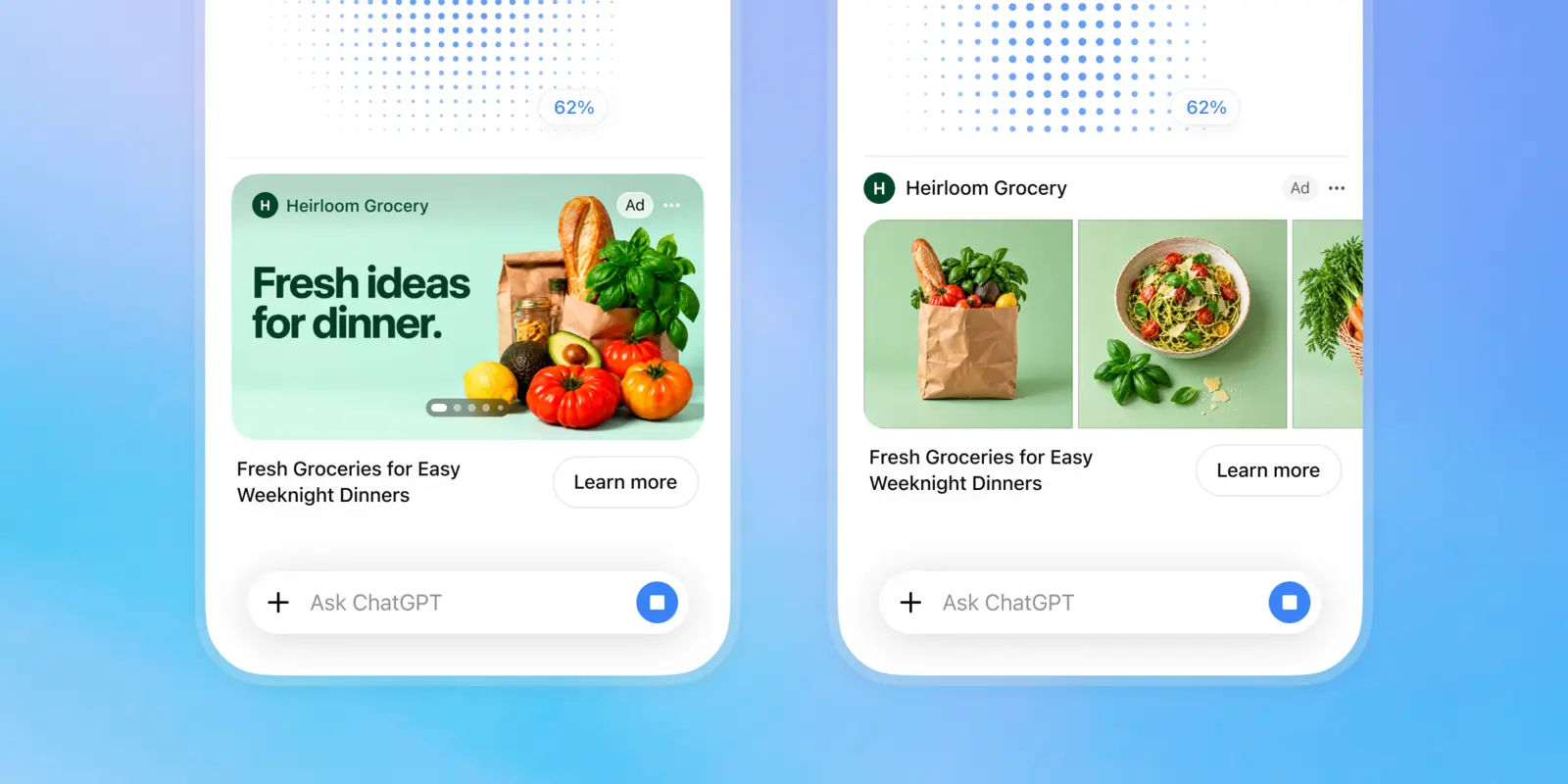
The new image format during image generation, initially available only in the U.S. Image: OpenAI, Source: openai.com/index/new-chatgpt-ads-format-and-measurement
Does advertising influence the answers?
OpenAI says clearly: no. The guiding principle is “Ads do not influence the answers ChatGPT gives you.” According to the help page, ads run on separate systems, and advertisers have no way to shape, sort, or alter responses. By default, ChatGPT itself does not see the ads that are displayed; it only does so if you explicitly ask about the ad via the menu.
Consumer advocates remain skeptical, however. The North Rhine-Westphalia Consumer Advice Center warns that there is a risk consumers might mistake the ad for a recommendation. That is the crux of the problem: An ad appearing directly below a helpful answer has a different effect than one appearing above ten blue links. A branding expert summed it up in the trade publication B&T: A search provides options; AI provides a recommendation.
How the ads are selected
In Germany, only the current conversation is taken into account for now. According to OpenAI, personalized advertising is not initially available in the European Economic Area or Switzerland. Instead, ads are served based on the content of the current chat, the user’s approximate location, the time of day, and the device. According to OpenAI’s EU Privacy Policy, the legal basis for this is legitimate interest. For personalized advertising that also uses past chats and reminders, consent will be required at a later date; a specific timeline has not been announced.
Advertisers do not see any chats. According to OpenAI, advertisers never receive chats, chat histories, reminders, names, email addresses, precise locations, IP addresses, or sensitive information—only aggregated metrics such as views and clicks. Conversely, OpenAI can obtain information about purchases made by advertisers via the pixel and the conversions interface, as stated in the privacy policy.
There are no ads for sensitive topics. According to OpenAI, ads do not appear alongside conversations about personal health, mental health, or politics. The advertising guidelines also exclude, among other things, gambling, tobacco, weapons, and political content.
How to Turn Off Ads
You can find these settings under Settings > Ad Settings. There, you can view your ad history and detected interests, delete your ad data, and turn off personalization once it becomes available. In the web interface, this link takes you directly there:
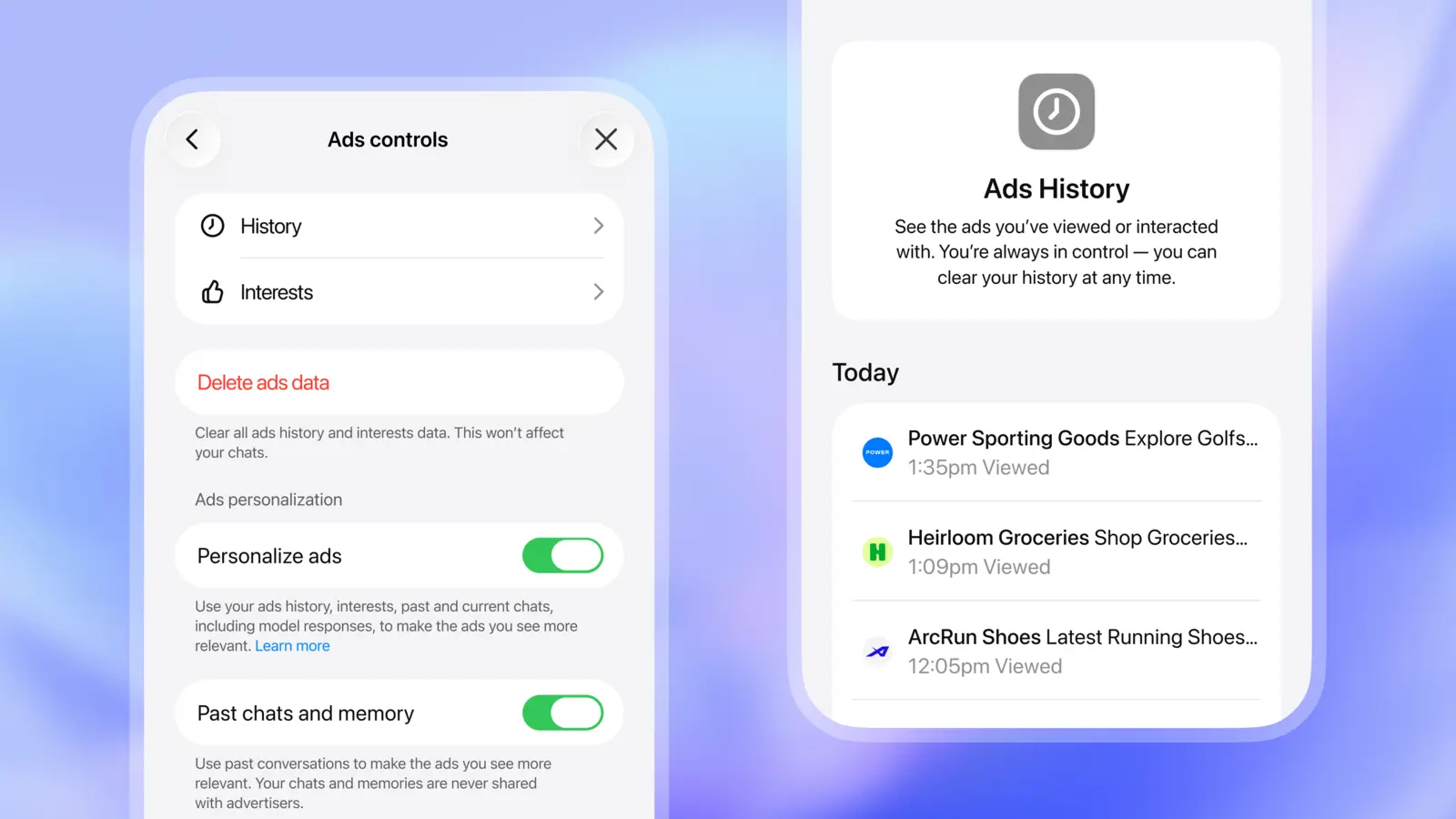
Ad settings, including history, interests, deleting ad data, and the toggles for personalization. Image: OpenAI, Source: openai.com/index/testing-ads-in-chatgpt
The free plan offers an ad-free option with fewer messages. If you want to get rid of ads in the Free plan, switch to the ad-free version in the ad settings. The trade-off: fewer messages and, according to OpenAI, no access to certain tools such as image generation or Deep Research. This option is not available in the Go plan. Incidentally, the German help page misleadingly translates the button as “Switch to the ad-free Go subscription,” even though Go itself displays ads.
If you want to use ChatGPT without any ads, you’ll need to sign up for the Plus plan or a business plan. For businesses, this is the right choice anyway, since the Business plan doesn’t use your data for training by default. You can find all the details about the plans in our guide, “How to Use ChatGPT Effectively.”
For Businesses: Place Ads in ChatGPT
Since August 31, German companies have been able to book ads on their own. According to the help page, OpenAI’s Self-Serve Ads Manager is available in 31 European markets, including Germany. The requirement is that the company placing and paying for the ads must be based in an eligible country. Initially, new accounts may only be allowed to run ads in their own country until the identity verification process is complete.
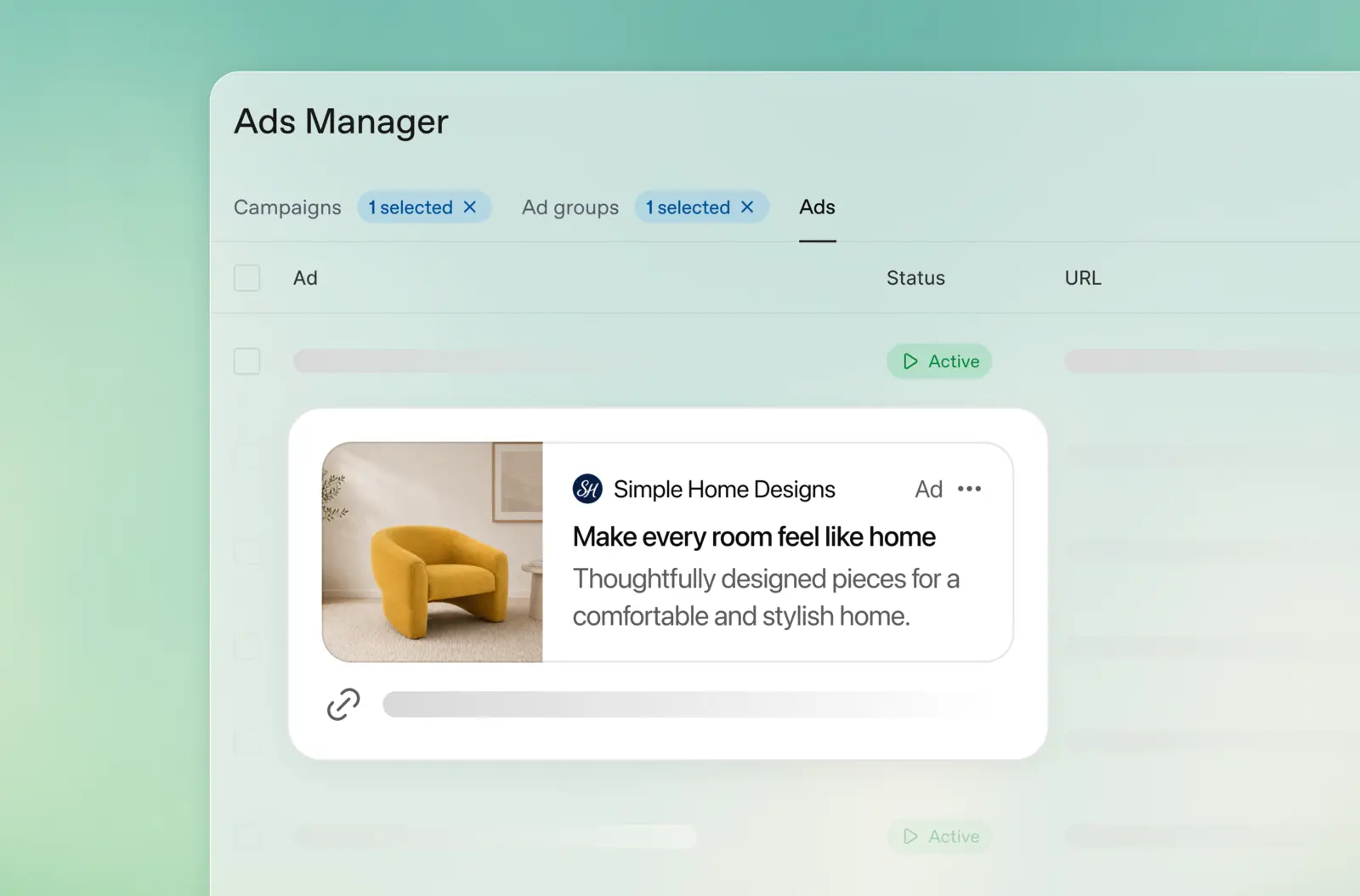
OpenAI's Ads Manager, featuring campaigns, ad groups, and ad previews. Image: OpenAI, Source: openai.com/advertisers
The structure is similar to Google and Meta, with one key difference. There are campaigns, ad groups, and ads. Instead of keywords, however, you enter “context hints”—that is, clues about which conversations your ad fits into. OpenAI emphasizes that these are not exact keywords and do not guarantee ad delivery. You can target by country, region, city, or ZIP code, as well as by device. For now, custom audiences based on customer lists should not be used in the European Economic Area as long as personalization is not available there.
The minimum budget is 15 euros per day. Billing is based on 1,000 impressions, per click, or optimized for conversions—though, according to OpenAI, you never pay per conversion. Tracking is done using the OpenAI pixel and a conversion interface. If you use the pixel on your own website, you must include a consent option in your cookie banner and a statement in your privacy policy.
Your landing page must not block OpenAI's bots. OpenAI checks every landing page for relevance and compliance with its guidelines. According to the help page, OAI-AdsBot and OAI-SearchBot must not be blocked. Check your robots.txt file and your firewall before your first campaign launches. Our article " Creating a Landing Page" shows you how a landing page should be structured.
How much does advertising cost on ChatGPT?
OpenAI does not publish prices or comparative figures. Its help page explicitly states that there are no performance benchmarks yet. What is known comes from press reports. According to The Information, the price for 1,000 impressions was around $60 at launch in the U.S. According to Digiday, it had fallen to between $25 and $45 by April. For comparison, Digiday cites prices of about $5 for Facebook, about $8 for Instagram, and about $39 for LinkedIn.
According to panel analyses, click-through rates range from 0.5 to 1.9 percent. The provider Graphite estimated these figures using data from Similarweb for several countries; there are no figures available for Germany. The figures vary widely depending on the market and are estimates from a third party, not data from OpenAI. For your planning purposes, this means: Don’t rely on fixed figures—measure them yourself.
OpenAI cites its own success stories, all from the U.S. According to OpenAI, WeightWatchers’ cost per new customer was 15.3 percent lower than the benchmark for search ads. The Radisson hotel chain combines ads with its own plugin in ChatGPT; more than half of the bookings tracked from the ads were attributed without a direct click. These figures come from the companies and their measurement partners and have not been independently verified.
Who Can Benefit from ChatGPT Advertising
Good candidates include local service providers, online stores with product feeds, travel services, and digital products. These are precisely the areas listed as permitted in the advertising guidelines. According to OpenAI, product cards from the feed are the most effective format for online stores; there’s also a Shopify app available. Local businesses benefit from targeting a city or ZIP code if their services match typical questions, such as “How much does a new bathroom cost?” or “How do I insulate my roof?”
In Germany, financial, healthcare, and legal service providers are excluded. The advertising guidelines state explicitly that ads for financial and healthcare services outside the U.S. are generally prohibited, and ads for legal services are currently prohibited as well. This means that tax advisors, medical practices, physical therapy clinics, and law firms cannot use ChatGPT as an advertising channel for the time being.
Start with a small test, not your entire budget. Our recommendation for businesses that already run Google or Meta ads: two to four weeks at 15 to 30 euros per day, a dedicated landing page, proper tracking with consent, and a comparison of the cost per lead with your other channels. For comparison, you can find out how much advertising on Meta costs in our post on Meta ad costs. And just as important as ads is appearing in the responses themselves, as our test with GPT-6 and Intelligent UI shows.
Here are the things you should check off before you start:
Criticism, Data Privacy, and the Competition
German data protection authorities are warning about the next stage. Berlin’s data protection commissioner, Meike Kamp, writes that the delivery of personalized advertising reaches a new level of intrusiveness when it also uses information from chats, devices, and user behavior. Authorities in Hamburg and Lower Saxony also issued warnings in early October. These are advisories to users, not legal proceedings against OpenAI. Since August 31, the European Commission has also classified ChatGPT as a “very large” online search engine under the Digital Services Act. By the end of December, OpenAI must, among other things, establish a public advertising archive.
Sam Altman once considered advertising a last resort. In 2024, he said at Harvard that he found the combination of advertising and AI “uniquely unsettling” and viewed advertising as a “last resort” for the business model. Today, OpenAI reports annual advertising revenue of one billion dollars—achieved in less than 200 days—and “tens of thousands” of advertisers in over 60 countries.
The competition is taking different approaches. In February 2026, Perplexity eliminated all advertising, according to heise, out of fear of losing user trust. Anthropic has promised that Claude will remain ad-free and has even promoted this in Super Bowl commercials. In the U.S., Google also displays ads in its AI overviews and in the AI mode of its search engine. If you want to work ad-free by choice, you’ll find an alternative in our guide, “How to Use Claude Properly.”
What Has Changed and What That Means for You
October 5, 2026: OpenAI announces image ads during image generation, with testing set to begin in the U.S. in late October. For you, this means that visually rich industries will soon have their own ad format.
October 1 and 2, 2026: Data protection authorities in Lower Saxony, Berlin, and Hamburg warn against personalized advertising based on chat histories. For you, this means that personalized advertising will require consent in Germany.
September 16, 2026: Sponsored Agents are being tested in the U.S., along with integrations with HubSpot and Shopify. For you, this means that online stores will soon be able to manage campaigns directly from their store.
August 31, 2026: Self-Service Ads Manager launches in Germany; ChatGPT is classified as a very large online search engine. For you, this means you can now run your own campaigns.
August 24, 2026: Launch of advertising in Germany for the Free and Go plans. For you, this means your customers will see ads—including those from your competitors.
Date of this version: October 12, 2026. Ad formats, prices, and rules are currently changing on a monthly basis, so we update this post regularly.
Want to test ChatGPT ads?
We set up campaigns for businesses, from creating the right landing page to tracking with consent, all the way to comparing results with your Google and Meta ads. Related: What Meta Ads Really Cost · Service: Ad Management
Let us know what you have in mind by filling out our contact form. We'll respond within 24 hours—personally and without any sales pitch.
More Articles
© Marschfahrt Studio
Practical knowledge on web design, SEO, AI, and conversion optimization. Based on real projects, without any marketing spin.

